


Inter Smart
Talk to our expert today

A new website design should not come at a cost to your website rankings.
It’s not very uncommon for companies to lose their SEO rankings during a redesign. Not because the new design is bad, but because SEO wasn’t properly migrated during the process. This is one of the most common and avoidable mistakes.
This article shows you step by step what to do to ensure that a redesign doesn’t jeopardise your visibility on Google but ideally even improves it.
This doesn’t happen by chance. Certain errors reliably lead to Google ranking a page lower after a relaunch. The most common causes are changed URL structures without redirects, removed content that previously ranked well, missing or incorrectly configured meta tags, and significantly slower loading times due to excessively large image files or poorly implemented scripts.
According to the Google Search Central Community, one of the biggest risks is changing URLs without setting up 301 redirects. Google then loses the connection between the old and new pages. Links that other websites have placed on the old URLs become ineffective. Rankings built up over months or years can disappear within days.
The first step begins before even a single design element is changed. A thorough inventory of the current website is essential.
Specifically, this means documenting all current URLs, identifying the best content based on traffic and rankings, recording all existing backlinks, and documenting the technical SEO data of the current page. Tools like Google Search Console provide this data free of charge and directly from Google.
This inventory is the starting point. It shows what absolutely cannot be lost. Pages that rank well must be treated with particular care during the redesign process. Its content, structure, and URL should be preserved as much as possible.
Create a complete backup of the old website. This requires little effort but provides an important safety net in case something goes wrong during the launch.
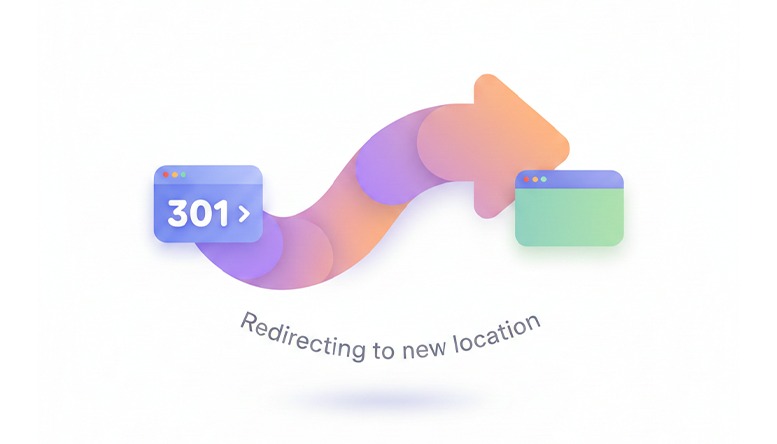
The new page receives no existing history, authority and rankings for evaluation when a URL fails to establish a redirect. The 301 redirect provides Google with permanent information about the old address, which has moved to a new website address. Most link value transfers to the new destination according to this process. The system maintains ranking stability while backlinks continue to function properly.
The website requires 301 redirects for all URL changes which occur during a redesign process. No exceptions. Skipping this risks massive ranking losses.
URL changes should generally be avoided unless absolutely necessary. The best redirect is the one you don’t need.
A staging environment is a kind of test version of the website that isn’t publicly accessible. The new design is built, tested, and optimised there before going live.
A staging environment allows you to identify technical problems before you launch. Missing redirects, broken internal links, incorrectly set noindex tags, or slow loading times become visible there without affecting Google or real visitors.
A common mistake: The staging environment is blocked for search engines, which is the intended behaviour during testing. However, sometimes this block is accidentally left active after launch. This makes Google unable to crawl the site.
Not all content is as valuable as far as SEO is concerned. There are pages which add no value to the traffic, and there are those that are needed in rankings.
The Google search console indicates the number of visitors who visit the various pages of the website and the keywords on which the pages are ranked. These are the pages that are the core of your SEO profile. Their contents must not be just removed, severely cut or reorganised as part of a redesign without taking into account the search engine effects.
The keywords and core messages should be maintained when updating the content. New documents, which avoid the same keywords or take a different direction, can easily ruin months of accumulated rankings.
The same is on internal linking. Internal links should also be introduced to be changed when the structure of the pages is changed. The internal broken connection is not only poor for visitors but also negative feedback for search engines.
Google not only uses content evaluation but also uses technical performance to evaluate websites. An official ranking measure is the so-called Core Web Vitals. They also gauge the speed of loading a given page, the stability of the layout and the responsiveness of the layout to user input.
The newer designs are likely to be resource-consuming. Bigger pictures, more JavaScript, new fonts, and more animations – any of them may make the load time longer. And a slower website translates to less ranking.
In particular, the following can be useful: compressing images prior to uploading, lazy loading in such a way that only images can be loaded when they are in view, and JavaScript and CSS should be as trim as possible. The Google PageSpeed Insights test can indicate the areas where it can be optimised once it has been launched.
Google started ranking websites based on the mobile-first principle several years ago. It implies that Google evaluates the mobile form of a page, not the desktop form.
Redesigning something that may be very attractive on a desktop but cannot be read or loaded quickly on a mobile phone has a direct negative impact on rankings. This may seem like a no-brainer; however, it is a common practice mistake since the building of designs is usually done first on desktops.
The appropriate one is Mobile First: The design is made on small screens and then extrapolated to bigger screens. Inter Smart has operated on this principle since it is merely the more ethical and eco-friendly way.
The introduction is not the conclusion but the start of a critical period. Close monitoring of the site should be done in the initial days and weeks of relaunch.
One can check the Google search console to see whether or not Google is crawling and indexing the new site. There will be broken redirects, blank pages (404s), and unindexed URLs there. Moreover, the sitemap is to be updated once the launch has been completed and sent back to the Search console so that Google can easily identify the new structure.
Google Analytics will reveal whether the traffic is steady or not. It is natural that there is a slight drop just after the launch because Google requires time to test the new pages. Nevertheless, a steep decline, which remains long-lasting, is a bad indicator that needs to be acted upon.
Also: Test all forms, buttons and interactivity. A contact form that fails to work once it is made would be questioned and hence affect revenue.
Redesign is a complex process. It is such a big thing when it comes to numerous areas that something can go wrong if you are not aware of what to be careful of. Inter Smart is a well-experienced agency in this sphere and takes companies through each step of the process.
Inter Smart would make its approach by first conducting a total SEO analysis of the current site. What ranks well? What needs to be retained? What URLs will need to be redirected? These queries are resolved prior to the initial designing aspect being tapped.
In the project, Inter Smart performs the work in a staging environment, tests and verifies all technical aspects properly, and when the site is ready, it goes online. Rankings and traffic are also actively followed after launch, and any abnormalities are mitigated instantly.
Inter Smart does not simply provide new designs to those who work with it. They receive a site that is more successful upon its introduction than it used to be, is technically stable, and expands on the SEO efforts of the preceding years instead of reversing them.
Website redesigning and good SEO rankings can go hand in hand. But in order to achieve this, it must have a systematic approach and technical expertise, as well as the desire to think about SEO in the initial stage, not only at the end.
The main points in a nutshell: The pre-launch inventory, the 301 redirect on every modified URL, the staging environment to test all the changes, the retention of the most valuable material, the technical optimisation of the core web vitals, and closely monitoring the place after the launch.
The users who adhere to these rules can enjoy the best of the two worlds, that is, a more modern and high-performing web and the rankings that they have acquired over time. Inter Smart helps you to master this balancing act successfully.
Need guidance? Request a callback, and our expert will reach out at your convenience.