
Inter Smart
Talk to our expert today
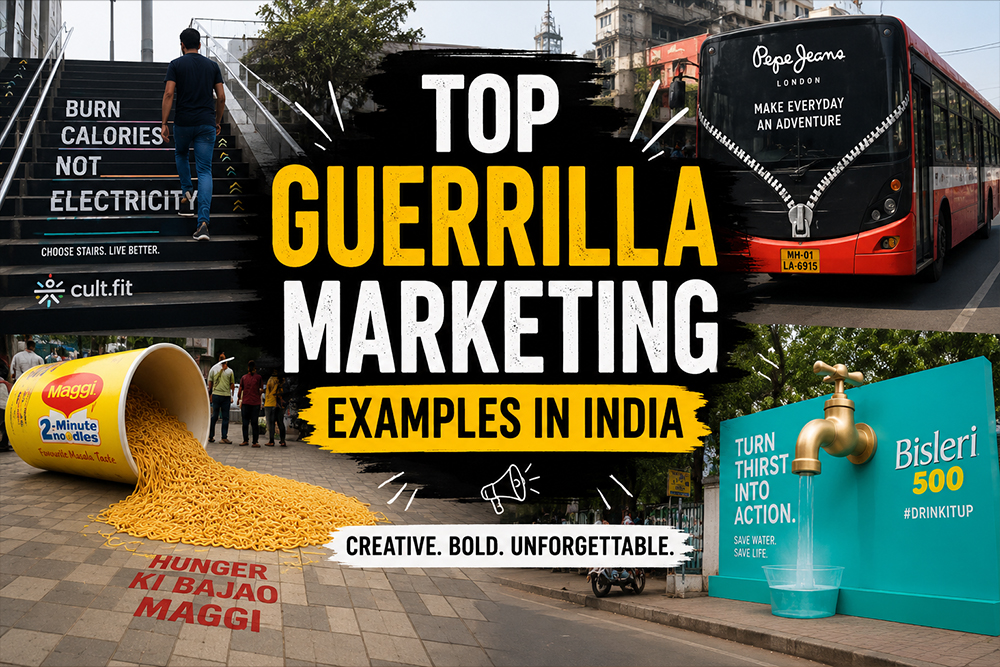
The most effective marketing campaigns do not require the greatest financial investments. The right moment needs only one powerful concept to create successful results.
Guerilla marketing aims to deliver ads through unexpected public interaction. The advertisement delivers its message without stopping viewers but instead uses surprising elements to achieve its goal. The novelty and surprise factor motivate users to participate, which results in lasting effects.
This article analyses successful Indian guerrilla marketing campaigns to show their effective strategies, which businesses can use to create their own successful campaigns.
Guerrilla marketing is a low-cost, high-impact approach where creativity trumps budget. It works by catching people off guard in their everyday environment. Guerrilla marketing is very different from traditional marketing because of its conceptual originality. If it becomes predictable, it stops working.
Here are some of the most effective guerrilla marketing examples in India. Each one shows a different approach, a different industry and a different reason why it landed so well.
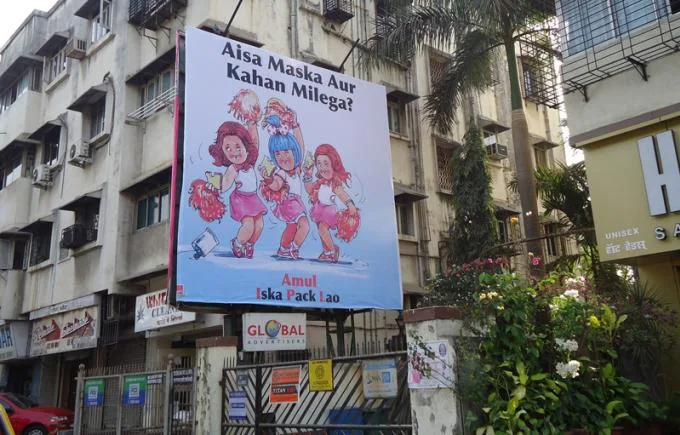
An Amul billboard in Worli, Mumbai
What they did: Amul has one of the world’s longest-running guerrilla billboard campaigns. Amul’s billboards feature clever, topical commentary on news, politics, sports and culture, always with their famous butter girl. Their billboards come up just days after an event, so Amul is always topical.
Why it worked: The jokes are funny, and the timing is spot-on. Consumers eagerly anticipate Amul’s next ad. This turns the ad from passive to active viewing. This campaign, at age 60, has created a brand that is both recognisable and ever-new.
What businesses can learn: Consistency builds culture. It’s not necessary to come up with a new format every time. Once you have a formula, stick to it and refine it. Being topical is a great way to “be” relevant.
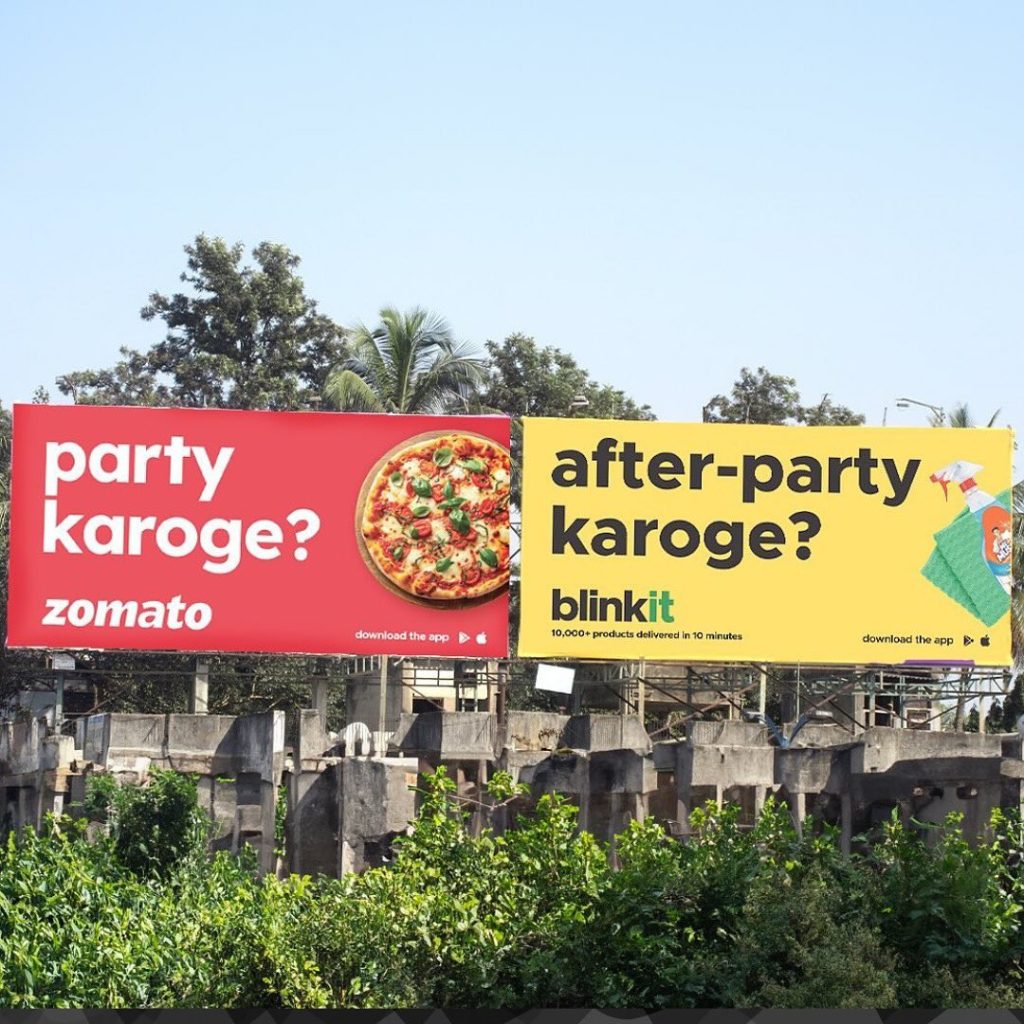
What they did: Both brands have been known to run outdoor billboards that have very brief and chatty text, almost like a tweet. Blinkit and Zomato even did a series of humorous co-branding campaigns.
Why it worked: It didn’t feel like advertising. It was like two brands playing a game that was funny, relatable and timely. Co-branding made both companies look smart. Images were taken, and articles written. The value of the earned media was much greater than the cost of the two billboards.
What businesses can learn: Guerrilla marketing can be a great option when the brands share a target audience. Humour and resonance go hand in hand. And less is always more in outdoor advertising.
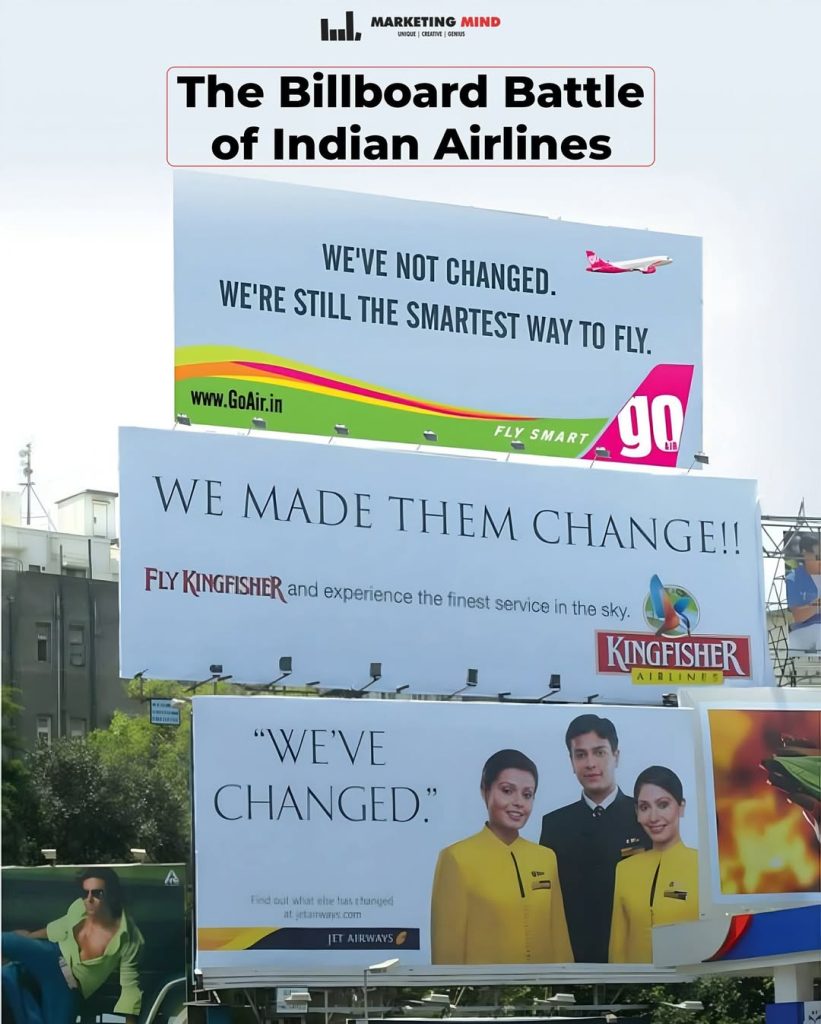
What they did: In Mumbai, at Cadbury Junction, three airline billboards were placed one on top of the other. Jet Airways started with “We’ve changed”. Kingfisher followed suit on top with, “We made them change!” GoAir, in between, responded: “We’ve not changed. We’re still the smartest way to fly.”
Why it worked: It brought outdoor static to life. It’s all being read and laughed at. It was strategically placed and in perfect order. All the airlines were noticed because of the others. That’s ambush marketing at its finest: three for one, and the impact is magnified.
What businesses can learn: Context is everything in outdoor advertising. Where your message sits matters as much as what it says. Watching what competitors are doing and positioning your own response can earn you far more attention than a standalone campaign.
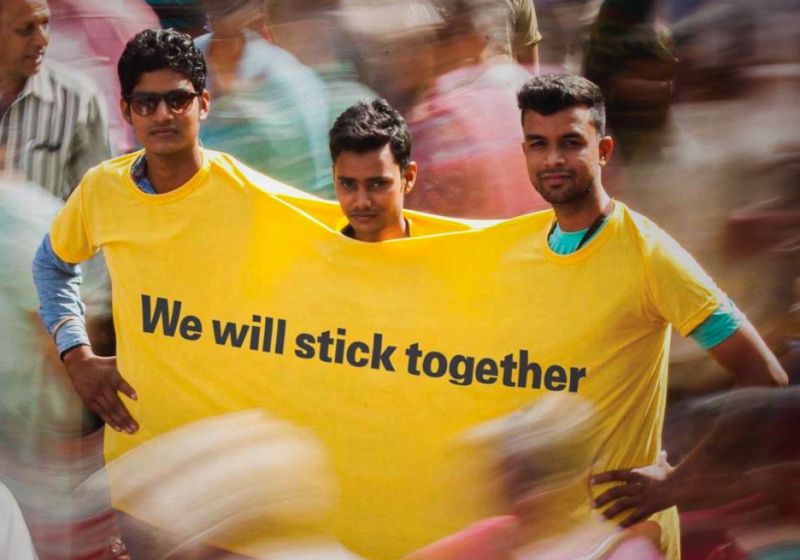
What they did: The legendary glue brand Fevicol advertised the Kumbh Mela, one of the world’s biggest gatherings. Their message spoke to the brand equity: Fevicol is so strong that it holds this crowd together. It positioned itself as a cultural phenomenon with a universal message.
Why it worked: Kumbh Mela attracts tens of millions of visitors from all over the country, regardless of language, age or class. Fevicol communicated to all of them visually. No translation needed. The legacy built the brand recognition to be understood.
What businesses can learn: Mass events are a great opportunity to reach lots of people for a fraction of the cost of advertising. Being there with a message that resonates with the event, instead of just advertising, makes an event a platform.
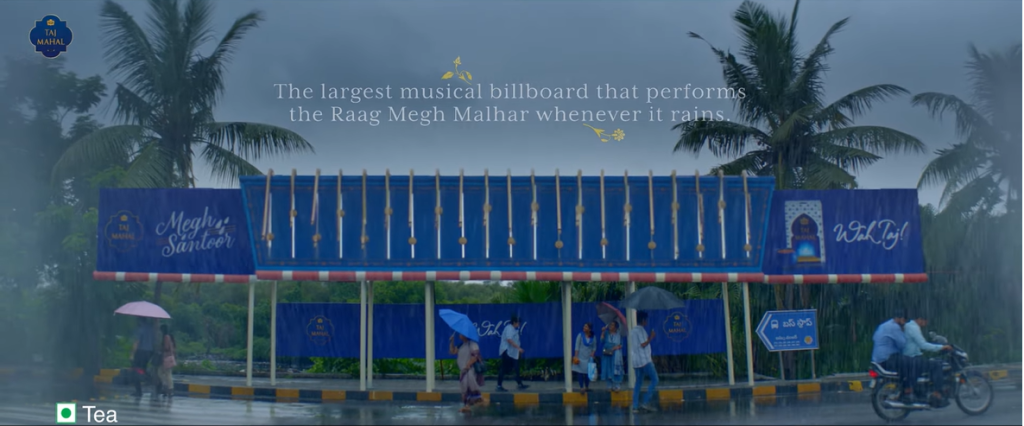
What they did: Working with the creative agency Ogilvy, Taj Mahal Tea set up an interactive billboard in the city of Vijayawada – the “Megh Santoor”. The billboard was a musical version of the santoor that played Raag Malhar with the rain. The 209-square-metre billboard was installed outside Vijayawada Railway Station and was awarded the Guinness World Record for the world’s largest interactive billboard.
Why it worked: The concept was based on cultural truth: Indians like tea in the rain. Rather than tell the audience this is the case, the campaign made it so. When you have a billboard that literally plays classical music during the rain, you have people’s attention. People at a busy train station stopped to listen and made the connection with the brand, as the campaign wanted them to.
What businesses can learn: The best guerrilla campaigns play nice with the environment. When your installation reacts to the environment, be it rain, wind or people, it’s a part of the environment.
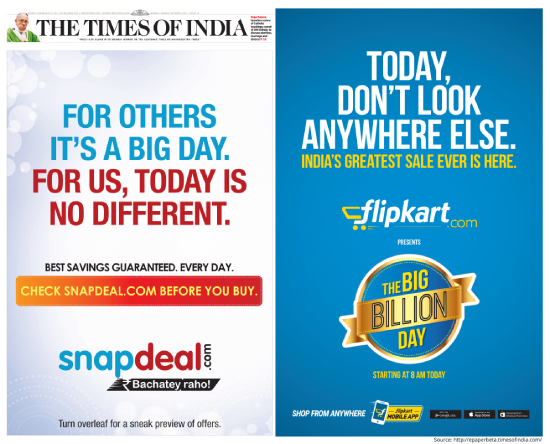
What they did: On October 6, the day Flipkart’s Big Billion Day Sale ran, a full-page ad in the Times of India read, “Today Don’t Look Anywhere Else; India’s Greatest Ever Sale is Here.” Snapdeal decided to run a front-page ad in the same edition of the same newspaper, next to Flipkart’s: ‘For others, it is a big day. For us, today is no different.’
Why it worked: It was all about timing. Snapdeal didn’t run an ad; they ran an ad that could only be read in relation to Flipkart’s ad. The ad used Flipkart’s advertising budget to build anticipation for Snapdeal’s joke. You just couldn’t read one without reading the other. It was cheap, brave and unmissable.
What businesses can learn: You don’t have to make the moment. You can steal the moment and make it your own. When done right, ambush marketing can earn a smaller company enormous attention from a competitor.
The guerrilla marketing examples from India demonstrate that there are specific elements which consistently appear throughout the campaigns.
Both approaches serve a purpose, but they work very differently. Here’s a direct comparison:
| Aspect | Guerrilla Marketing | Traditional Marketing |
| Cost | Low, creativity-driven | High budgets required |
| Engagement | High, surprise-driven | Lower, often predictable |
| Reach | Viral via word-of-mouth | Paid, targeted channels |
| Flexibility | Easy to adapt quickly | Fixed, costly to change |
| Lifespan | Short but memorable | Long-term, repetitive |
| Consumer reaction | Excitement, emotional | Often ignored or skipped |
Guerrilla marketing isn’t a replacement for traditional advertising. It’s a complement, and for businesses with limited budgets, it’s often a smarter starting point.
Guerrilla marketing campaigns offer multiple operational methods which businesses can use. Some of them are:
Ambient Marketing: Placing ads in unexpected everyday locations. Like a gym equipment brand using its product design to create an advertisement at a metro station, which showed treadmill belts through step paintings.
Experiential Marketing: Creating live experiences that people can interact with. The rain-activated Megh Santoor billboard from Taj Mahal Tea uses its technology to create interactive displays.
Stealth Marketing: Marketers use covert techniques to introduce products to consumers while maintaining their unawareness that they are viewing advertisements. Brand ambassadors use products in public spaces to create spontaneous product discussions among people.
Viral Marketing: Content creators develop material which they intend to achieve widespread distribution through both mouth-to-mouth communication and social media platforms. Zomato’s billboard campaigns succeed because people frequently capture and distribute their content across social media platforms.
Ambush Marketing: Brands use their marketing activities to associate with their rival’s promotional events and major occasions, which they have not paid to sponsor. Snapdeal stepped into Flipkart’s Big Billion Day.
Grassroots Marketing: Businesses establish their market presence through community outreach programmes, which generate personal endorsements from residents. Local brand activations at neighbourhood events or markets.
The human brain has a tendency to focus more on things that people do not expect to happen. The Harvard Business Review study discovered that marketing campaigns which create intense emotional responses through surprise and amusement have a higher chance of becoming viral. People share information that brings them real surprise because they want to show their social network what they find to be remarkable. The value of that sharing exceeds the worth of a paid impression.
The International Journal of Marketing Studies found that campaigns which use unconventional methods take more time to produce results because they create stronger emotional bonds with viewers than standard advertisements do. Dopamine plays a role here, too. Unexpected positive experiences trigger a neurological response which strengthens the memory of that particular event. The scientific discovery represents more than mere academic value. The Kingfisher vs Jet Airways billboard exchange maintains its presence in public memory because it contained memorable elements.
The simplest example of guerrilla marketing exists as an advertisement that uses unconventional methods to promote a product. The India collaboration between Blinkit and Tinder shows two brands which create one shared discussion through their two adjacent billboards. The project requires minimal expenses while it generates significant media coverage for its results.
Generally yes, it is acceptable if the person avoids three specific activities, which include entering forbidden areas, making false marketing claims and endangering public safety. Ambush marketing activities that occur near trademarked events depend on their particular context to determine their legal implications.
It varies widely. Some campaigns, like a single bold billboard, cost very little relative to their impact. The Taj Mahal Tea Megh Santoor installation presents itself as a major artistic display. The defining quality is the creativity-to-cost ratio, not the absolute amount spent.
Absolutely. Guerrilla marketing was originally developed for small businesses that couldn’t compete with large advertising budgets.
Guerrilla marketing exists as an extensive marketing strategy which uses unconventional methods to connect with customers through direct contact. Viral marketing involves a specific content type which spreads through digital platforms when users share it. Not all guerrilla campaigns go viral, but the best ones often do.
The campaigns above didn’t just happen. They were the result of people who understood their audience, spotted an opportunity and had the creative confidence to act on it.
Inter Smart is one of India’s leading digital marketing agencies, with a track record across social media, content strategy, paid campaigns and brand activation. We work with businesses that want marketing which actually gets noticed.
We help you select the best strategy to accomplish your goals for brand recognition and lead generation, and to create shareable content.
We invite you to contact Inter Smart today so we can create a memorable experience together.
Need guidance? Request a callback, and our expert will reach out at your convenience.